


The AI developer ecosystem has exploded with tools designed to help build large language model (LLM) applications quickly, intelligently, and reliably. However, which AI tool or framework should you be using when there are so many options? Which AI tool or framework is right for you, especially when they come from the same parent company and have suspiciously similar name prefixes? Yes, we are talking about LangChain, LangGraph, and LangSmith.
LangChain, LangGraph, and LangSmith are three of the most prominent tools, but most people know the difference between the three and which one is right for them. Are they competing products? Different tiers of the same tool? The short answer is none of the above. They are three separate, complementary parts of a developing AI development stack.
In this article, we will erase your confusion and help you understand where one ends, and another begins to save you significant time, wasted compute, and architectural regret later.
LangChain vs LangGraph vs LangSmith: What's the Difference and Which is Right for You?
What is LangChain?
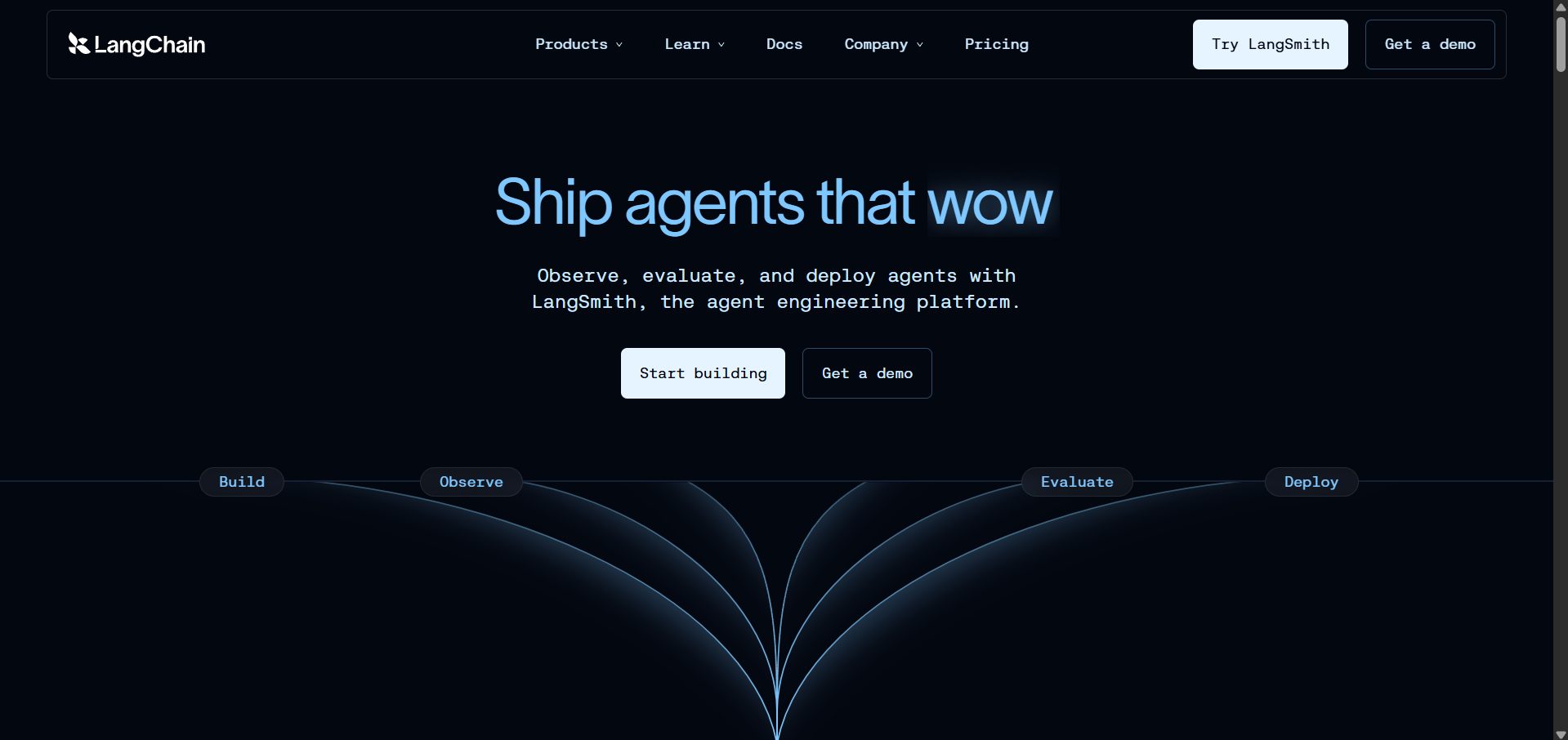
LangChain is a popular open-source framework that can help developers quickly build agents using various model providers. It is a great starting point for most teams exploring LLM-powered applications. You can think of LangChain as a toolkit that includes everything you need to connect models, tools, memory, and data sources into working agent pipelines.
LangChain's primary strengths include:
- Rapid prototyping via pre-built templates and broad integrations with major LLM providers, including OpenAI, Anthropic, Google, and others.
- Modular architecture that lets developers compose prompts, parsers, retrievers, and memory into functional agents without starting from scratch.
- Wide model compatibility so you can swap out the underlying model without rewriting your application logic.
- A massive open-source community with over 100 million monthly open-source downloads, the ecosystem is extensive and well-documented.
LangChain is ideal for developers who need to move from concept to working agent quickly. If your use case involves retrieval-augmented generation (RAG), chatbots, or tool-use pipelines, LangChain alone can be sufficient. The trade-off is that, for complex, stateful, or multi-agent workflows that require fine-grained execution control, a more expressive framework is necessary.
🔗 LangChain!
What is LangGraph?
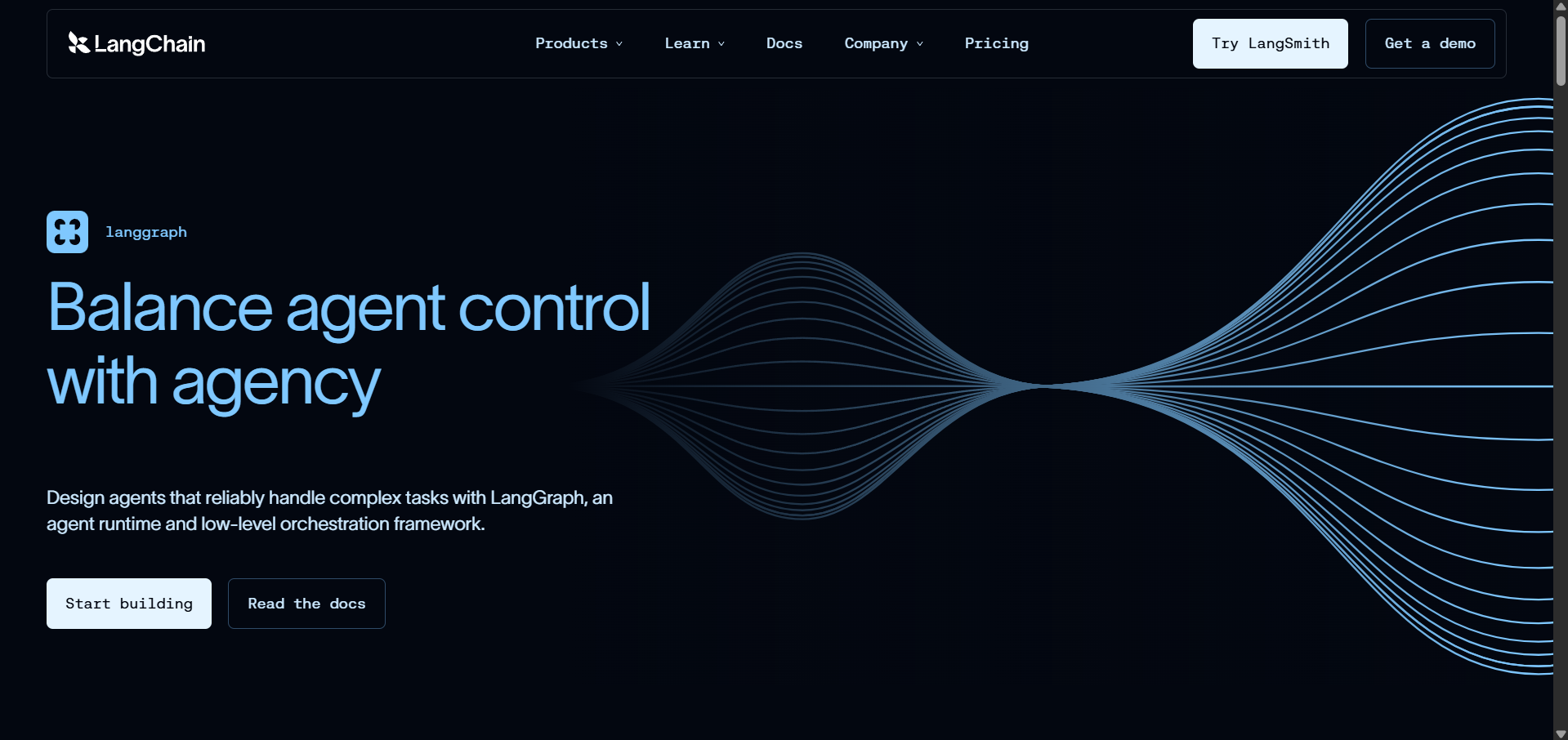
Where LangChain gives you speed, LangGraph provides the flexibility needed to create fully customizable agents, supporting diverse control flows, including single-agent, multi-agent, and hierarchical step-ups, all within one framework. LangGraph is built on a graph-based execution model where nodes represent tasks or decision points and edges define transitions between them. It enables the kind of deterministic, auditable behavior that production systems demand.
Key capabilities of LangGraph include:
- Human-in-the-loop controls to easily add moderation and quality controls to prevent agents from veering off course, and incorporate human-in-the-loop checks to steer and approve agent actions.
- Built-in persistent memory that can store conversation histories and maintain context over time, enabling rich, personalized interactions across sessions.
- First-class, token-by-token native streaming connects user expectations and agent capabilities by showing agent reasoning and actions in real time.
- LangGraph adds no overhead to your code and is specifically designed for streaming workflows.
LangGraph is an MIT-licensed open-source library and is completely free to use. It is the framework of choice when reliability, auditability, and precise workflow control matter, in other words, when you're moving from prototype to production with agents that cannot afford to behave unpredictably.
🔗 LangGraph!
What is LangSmith?
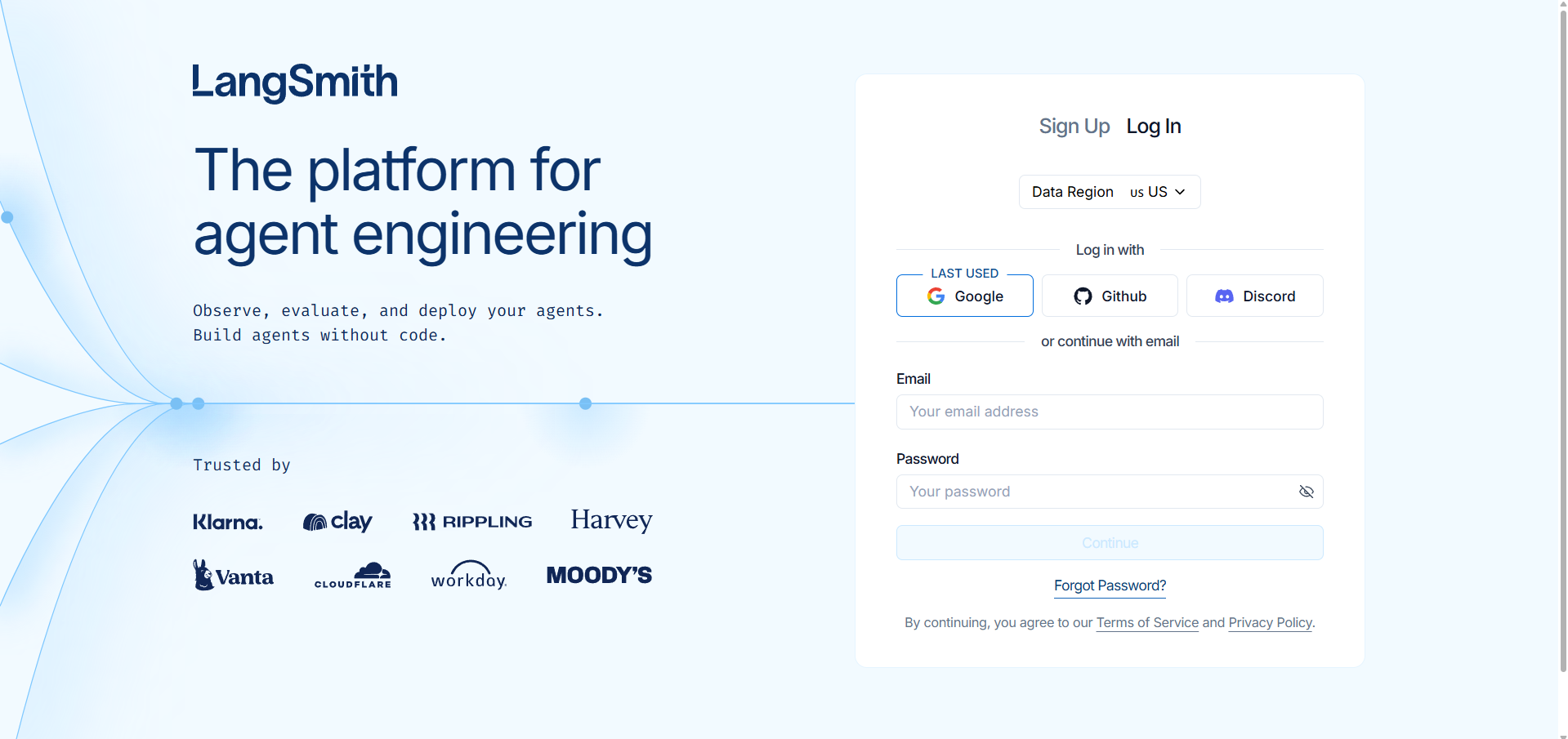
LangSmith is the framework-agnostic agent engineering platform for observing, evaluating, and deploying agents. While LangChain and LangGraph help you build agents, LangSmith helps you understand, measure, and confidently ship them. This difference is important because LLM outputs are inherently non-deterministic, debugging and improving agent quality require purpose-built tooling that traditional software monitoring cannot provide.
LangSmith covers the full agent lifecycle across four pillars:
- Observability: You can trace all conversations and agent actions to see every step your agent takes. Use Polly, the built-in AI assistant, to quickly understand long traces and find problems.
- Evaluation: Run LLM-as-judge and code-based evaluators, as well as multi-turn evaluators, using real production data. Adjust LLM judges to align with human preferences.
- Deployment: Handle human-in-the-loop approvals, background agents, and multi-agent coordination on a durable runtime with exactly-once execution, on horizontally scaling infrastructure.
- Agent Builder: A no-code interface that lets non-technical teams describe what they need (daily briefings, competitor tracking, project updates) and have LangSmith build the agent, learn from feedback, and ask permission before taking sensitive actions
LangSmith currently serves over 6,000 active customers, with five of the Fortune 10 among its enterprise users.
🔗 LangSmith!
Which Tool Do You Actually Need?
The honest answer for most teams is probably all three of them, at different stages.
- Start with LangChain if you're exploring and prototyping.
- LangGraph gives you the architectural control to handle real-world complexity reliably.
- LangSmith helps you gather feedback on what you launched and how it performs in real situations.
LangChain gets you moving fast while LangGraph helps you design a reliable, stateful agent with complex or multi-actor workflows, and LangSmith stops being optional the moment any agent touches real users, because without observability and evaluation, you're effectively flying blind.
The LangChain ecosystem is designed to grow with your needs instead of forcing you into a single way of doing things. This layered philosophy is, arguably, LangChain's greatest competitive strength.
💡 For Partnership/Promotion on AI Tools Club, please check out our partnership page.
