


Vibe coding is a magical way to build your own apps and websites using text prompts. There are plenty of vibe coding tools in the marketing right now, all promising a similar or the same headline, describe what you want, and AI will create it for you. Vibe coding tools are fundamentally driven by intent-focused AI agents, where you describe what output you want and get a quick working prototype of it.
What started as a viral tweet by Andrej Karpathy in February 2025 has now become one of the main focuses and a more dominant software development paradigm, expected to improve further in 2026 as AI models get better at coding and reasoning faster. However, different Vibe coding tools produce different outputs, mostly depending on the AI model powering them.
In this article, I decided to test different vibe coding tools (Base44, Lovable, Google Firebase Studio, and Replit) and the output generated by them. To make this test fair, we used the same prompt for all 4 vibe coding tools and gave them as much time as they needed to reason and build possible outputs.
AdCreative.ai: An AI-powered platform that automates the creation of high-performing ad creatives for social media and display campaigns.
Prompt used for comparison
Generate an enterprise-grade professional AI agent, agentic AI, and AI tools news landing page. Add interactive elements, animations, and make it fully responsive. Surprise me, be creative, do this step by step.
TL;DR:
One prompt and 4 vibe coding tools (Base44 vs Lovable vs Google Firebase Studio vs Replit): Which can build the best app?
1. Base44:
The first vibe coding tool we tried was Base44, a no-code AI app builder that has been acquired by Wix. Base44 creates fully functional apps from natural language prompts, with the app automatically hosted so it's instantly live and shareable.
Pros:
- A fast idea to live app workflow with the tool's built-in hosting that handles it automatically.
- Strong platform primitives (data, auth/access controls, integrations) are first-class.
Results:
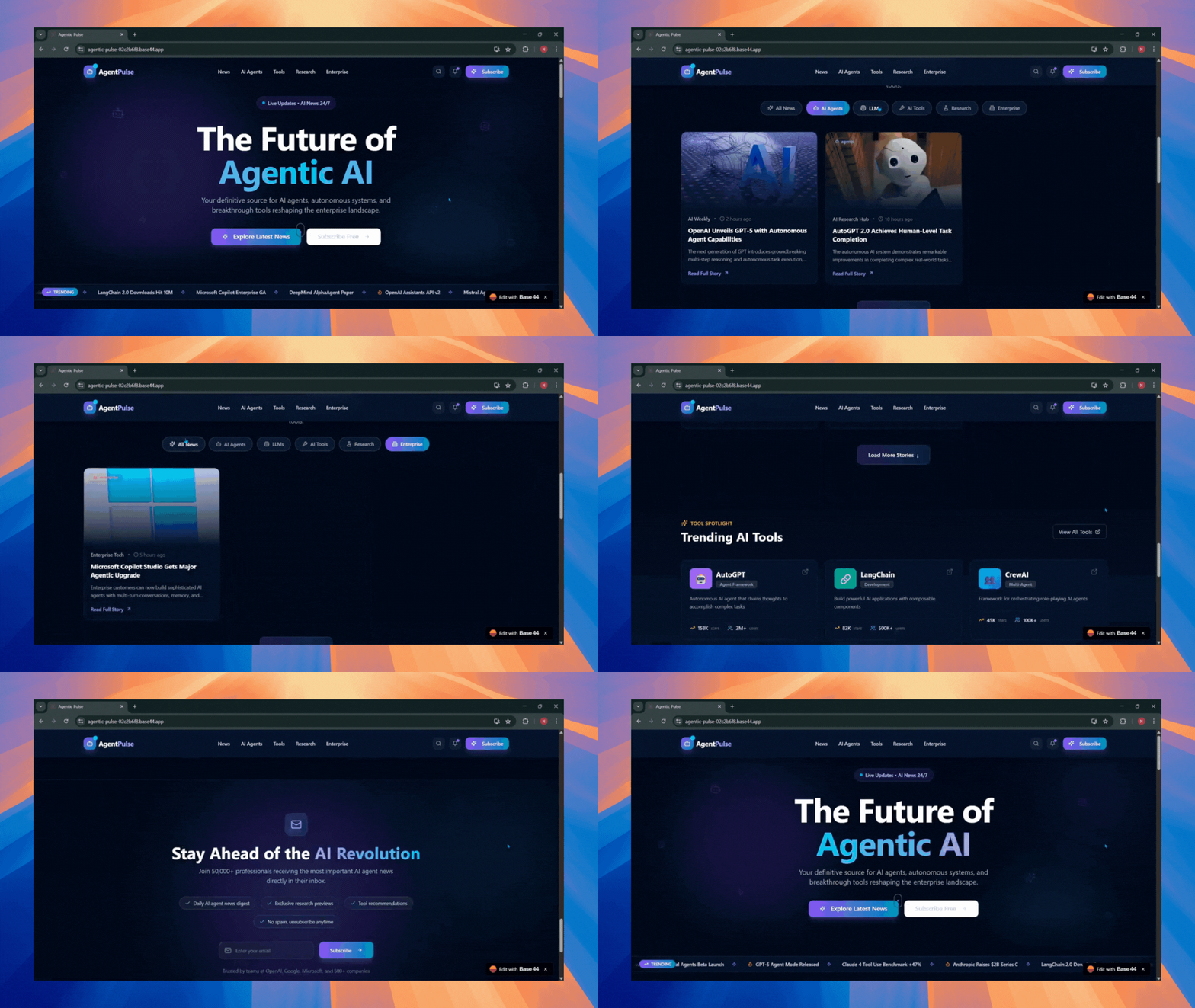
- Base44 took 6 minutes and 50 seconds to complete the project.
- Nothing feels missing, and the animations are smooth and well done.
- In addition to news, the platform has added a newsletter button and trending AI tools.
- The scroll-down animation is an effective way of encouraging users to scroll down.
2. Lovable:
The second vibe coding tool I used is Lovable, one of the most popular tools. This no-code vibe coding tool is an AI app and website builder that creates apps by chatting with AI. Lovable Cloud environment is built on a Supabase foundation that tries to give a production-ready setup (database/auth/storage) without manual Supabase setup.
Pros:
- Lovable's docs explicitly say you can export via GitHub and self-host, and that data/config can be migrated.
- Lovable documents built-in security scanning/checker workflows.
Results:
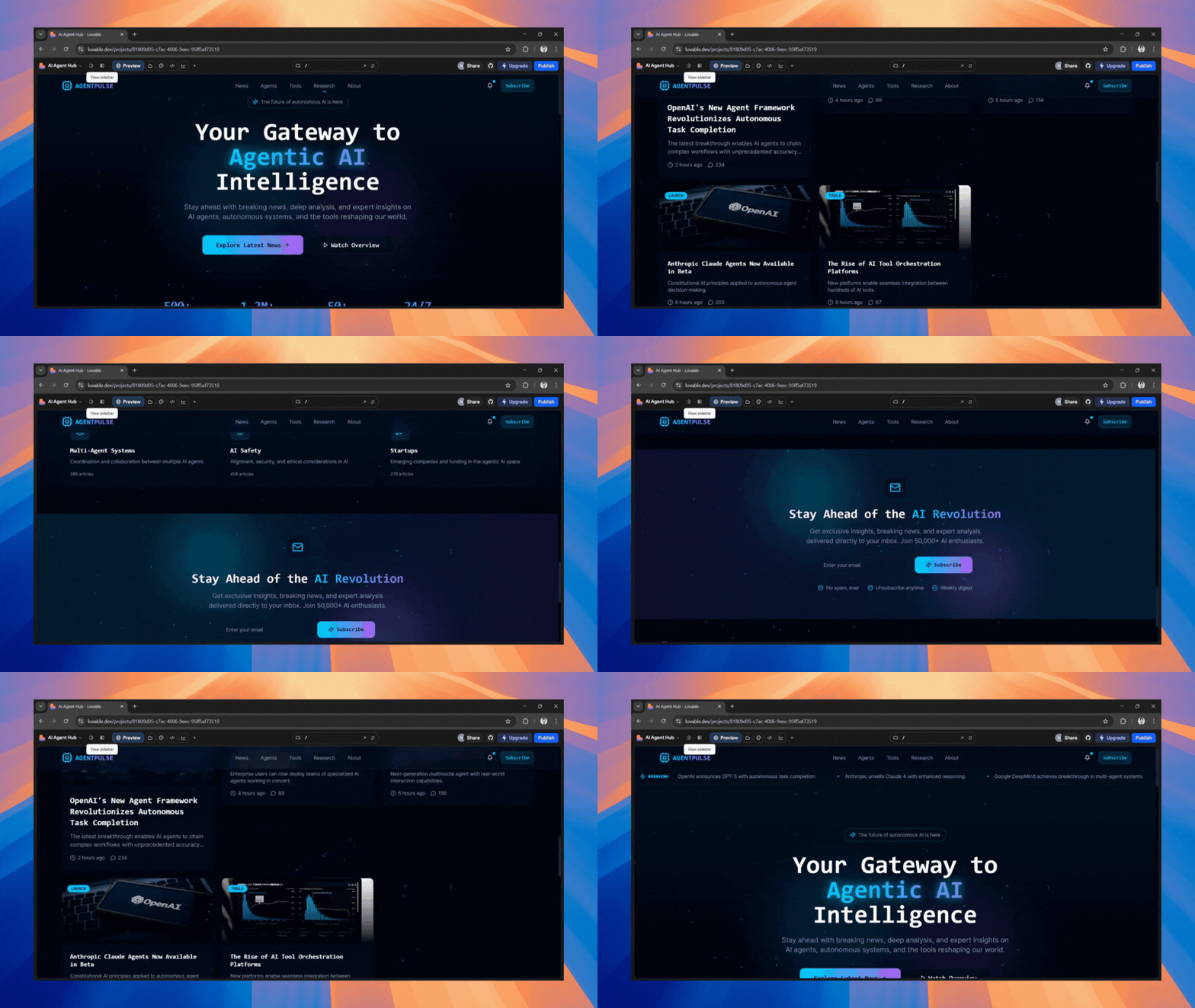
- Lovable took 5 minutes to complete the project.
- Although there was less content than in Base44, nothing was missing, and the preview was smoother.
- In addition to news, the platform has added a newsletter option.
- Lovable stuck to the prompt as the landing page was well-designed without making things overly complicated.
3. Google Firebase Studio:
Google Firebase Studio is an agentic, cloud-based development platform designed to help you prototype, build, test, publish, and iterate on full-stack apps from the browser using the App Prototyping Agent. It also offers native deployment to Cloud Run and seamless integration with Google's Genkit for building AI features.
Pros:
- Firebase Studio automatically provisions services like Firebase App Hosting, Cloud Firestore, and Firebase Authentication.
- It provides enterprise-grade security and scalability, making it ideal for AI-powered apps with Genkit integration.
Results:
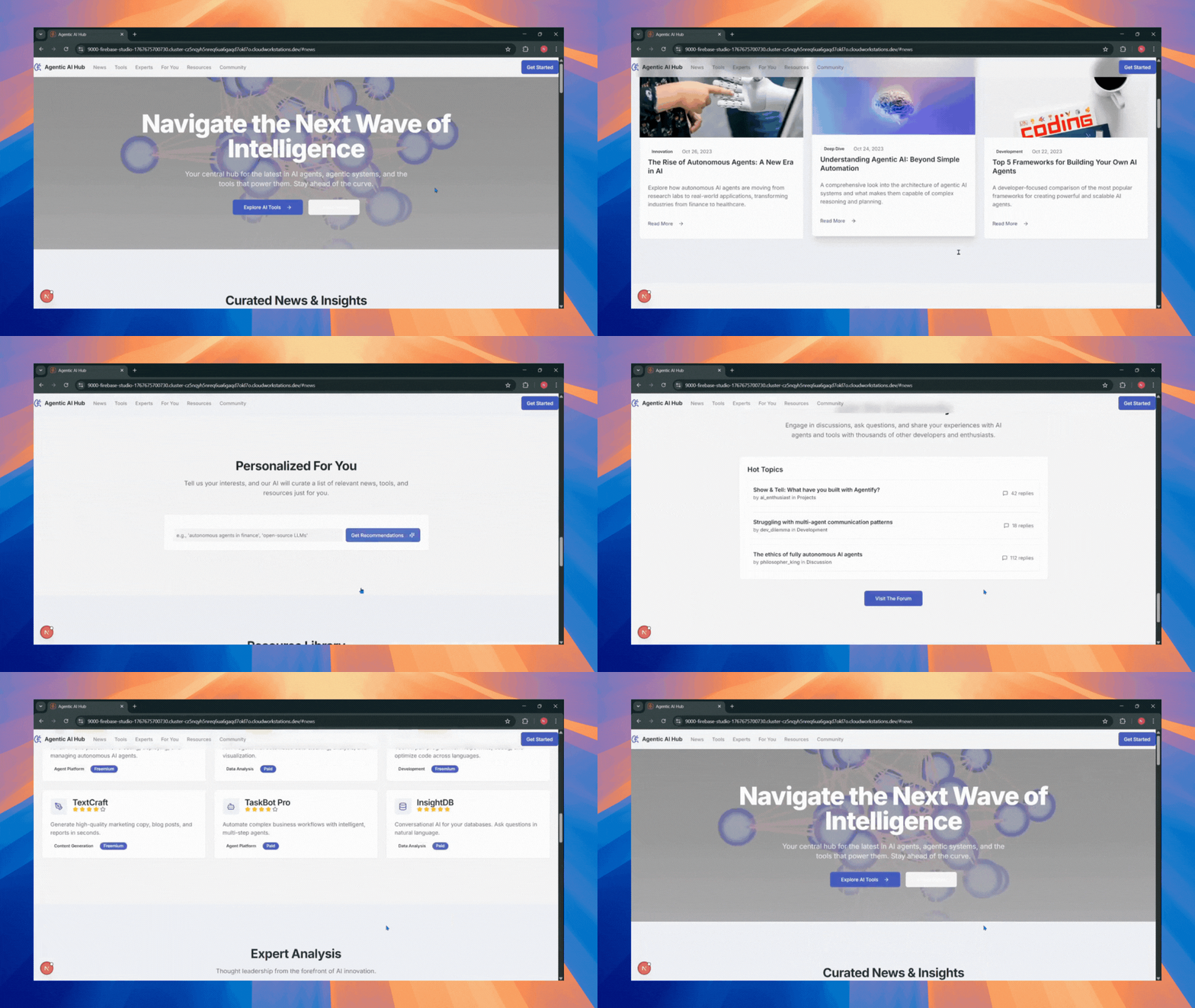
- It took Firebase Studio about 4 minutes to complete the project and pinpoint errors.
- The vibe-coded platform was easy to understand, smooth, and engaging.
- Firebase Studio not only generated the news part but also AI tools directory like Base44, expert analysis, news personalization, Resource Library, and community spot. However, there was no newsletter option.
- Firebase Studio delivered what was asked and plenty more.
4. Replit:
The final vibe coding in this comparison is Replit, another tool that grew in popularity due to vibe coding. Replit is a cloud development platform with Replit Agent, which can set up and create apps from scratch from everyday-language prompts, and then help add features by describing what you want.
Pros:
- Replit offers a fast prompt to a runnable workflow in a real workspace with built-in publishing options.
- Flexible deployment menu, including autoscaling and scheduled jobs.
Results:
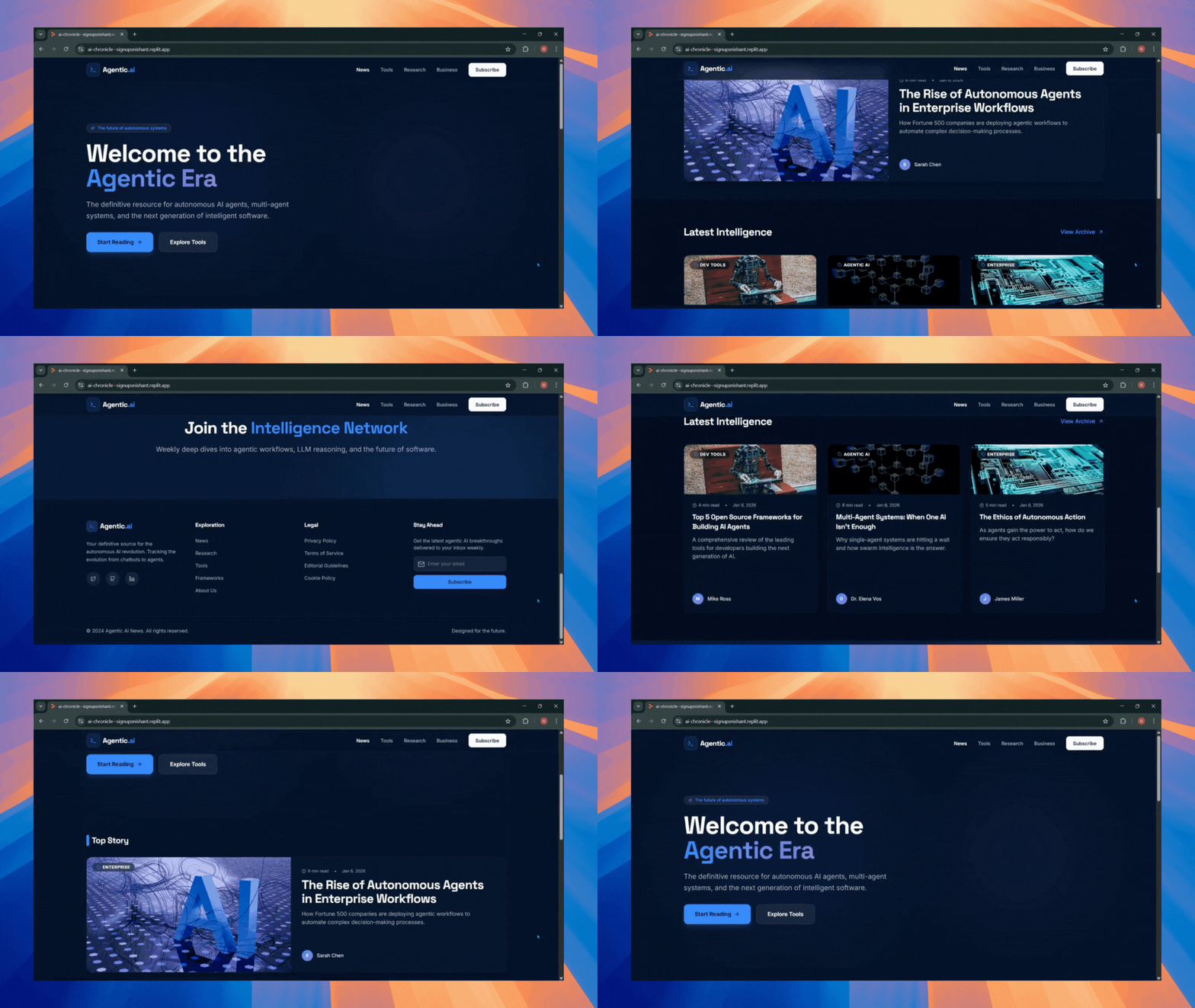
- Replit took the least amount of time (3 minutes) to complete the project.
- The platform was very simple and smooth to use; however, something felt missing as soon as you open the preview, there was plenty of empty space.
- The platform did create what it was intended for with an additional newsletter option. However, while there was an explore AI tools option, there were no tools on the landing page.
- Most importantly, Replit stuck to the prompt and delivered what it was meant to deliver.
In Conclusion:
The results were interesting, as we had already established that all vibe coding tools do the same thing (turn prompts into apps), but produce different end products, and this comparison proves it. We used the same prompt across all 4 platforms, and while Base44 and Firebase Studio shared the idea of showcasing trending tools, they did so in different ways and also had other distinguishing features. While none of them were perfect with room for improvement, you can still edit them make them perfect for you.
There wasn't one best vibe coding tool; they all have their own pros and drawbacks. The best vibe coding for you will be the one whose output you liked the most.
💡 For Partnership/Promotion on AI Tools Club, please check out our partnership page.
*Affiliate: We do make a small profit from the sales of this AI product through affiliate marketing.
